Mission
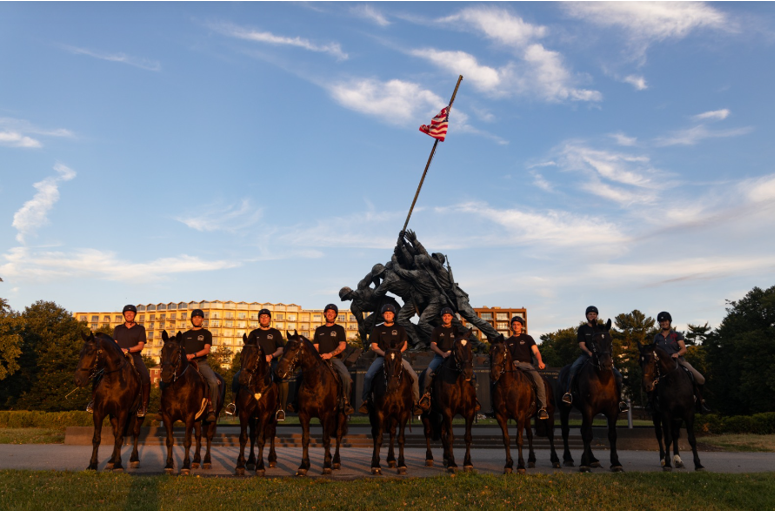
The Military Mounted Battalion (MMB) of the U.S. Army’s 3d U.S. Infantry Regiment (The Old Guard) is one of the most iconic pieces of U.S. military history, serving as the mounted escort to our nation’s fallen.
The MMB is authorized for Military funeral honors with escort for all Medal of Honor recipients, those who were prisoners of war (POWs) or who were killed in action (KIA), officers O-4 and above, and service members who attained the most senior enlisted and warrant officer ranks. The MMB is also authorized for all state funerals.
The Caisson Story
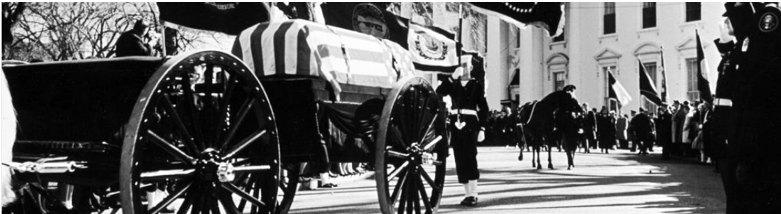
The Military Mounted Battalion assumed the responsibility of escorting our fallen in 1948 when the 3d U.S. Infantry Regiment (The Old Guard) was reactivated on Fort Myer, Virginia. The role previously belonged to the 3rd Cavalry Regiment. The tradition of escorting the fallen with a caisson, or artillery wagon, is tied to the traditional role of the wagon as it delivered its supplies to the front lines returning with the dead and wounded. Tracing the history of caisson support in Arlington National Cemetery is challenging, however there is silent footage and photographs from the post-World War I era illustrating the use of the caisson in funeral processions.
The original caisson wagons were built in 1918 by the American Carriage and Foundry Company and used for transporting 75mm cannons. The wagons were initially equipped with ammunition chests, spare wheels and tools necessary to maintain the cannons, however those items are replaced with a flat deck for the casket to rest.
The wagon is hitched with three horse teams in a traditional configuration known as Postilion, where the near (left) horses are ridden. Historically, the off (right) horses were used as pack animals. A complete team consists of seven horses, three pairs and one additional ridden horse known as the section horse. The hitched horse pairs are referred to as the wheel, swing, and lead. The wheel team is closest to the wagon and the largest, most powerful of the three pair. They are responsible for much of the pulling and braking. The swing horses assist in cornering as they “swing” wide to make turning the wagon easier. The lead horses set the pace and maintain proper distance within the procession.
Equipment
The Military Mounted Battalion recently made significant changes in their equipment. The wagon itself underwent major modifications to make it lighter, by roughly 1,400 pounds, from the original caisson wagon that was in use at Arlington National Cemetery. The new wagon is nearly half the weight of its predecessor and was developed to reduce strain on the animals. Additionally, the newest version of the wagon includes an articulating limber, which provides a better integration between the horses and the wagon itself.
Beyond the wagon, the saddles and tack are modernized as well. Each horse receives a custom saddle, made specifically to emulate the historic saddles used for the past 75 years. The horse’s tack was painstakingly measured to ensure a proper fit with the addition of padding and redesigned breast plates to alleviate pressure points and transfer the weight away from the horse’s neck. The saddles and tack used in today’s ceremony are modernized for today’s animals while having the same appearance of the historical elements known by so many.
Training
The MMB team has worked with some of the most renowned names in the equestrian community in preparation for the state funeral and their future support to ceremonies in Arlington National Cemetery. The soldiers are first selected after an initial assessment to determine proper fitness and mentality. They then proceed to the 12-week Basic Horsemanship Course, which was created under the supervision and direction of Olympic Gold Medalist David O’Connor. David was a member of the U.S. Equestrian Team for nearly two decades, competing in numerous Olympic Games and winning both individual and team medals. He is recognized as one of the best competitive equestrians in American history. He transitioned from competition to focus on other aspects of the sport and became a board member, and later president, of the U.S. Equine Federation. The riders are then paired with their horses for additional training here in Northern Virginia before heading to Ocala, Florida, for six weeks of immersion training. While in Ocala, the squad works with a team of hand-selected trainers from around the world who specialize in every aspect of the required skillsets necessary for Caisson’s unique mission. Additionally, the team receives continuous training here in Virginia with the trainers to maintain proficiency and build upon the foundation established in Florida.
Personnel
Some of the greatest changes made to the MMB in recent years were to the organization itself. The Caisson Platoon, as it was historically known, transitioned to a detachment and now to a battalion which reports directly to the regimental commander with a full command team. In recent years, MMB gained several civilian trainers and supporting veterinary staff who advise the organization on issues involving MMB's equipment and care of the horses, and they play a critical role in the procurement of new horses for the herd.
Changes were also made to the horses. The Old Guard retired over 40 horses in recent years based on age and length of service. Many of the retired horses were adopted by a private citizen and now reside in Ocala, Florida, near the World Equestrian Center where they are looked after by a world-class team and receive some of the best care in the world.